How to hire a tree service - the quick answer
Hire a tree service by defining the job, obtaining 3 itemized on-site quotes, independently verifying professional claims and insurance evidence, and comparing each written scope. Sign only when responsibilities, exclusions, cleanup, and payment terms are clear.
The basic hiring process
- Identify the affected trees and whether you need pruning, removal, stump grinding, or a professional tree risk assessment.
- Research several companies, then schedule on-site inspections with 3 providers.
- Compare written estimates line by line, including access, property protection, debris hauling, cleanup, permits, and exclusions.
- Verify claimed credentials in official directories. Request a current certificate of insurance for the legal entity performing the work, then confirm applicable coverage with the listed insurer or agent.
- Contact recent references and review the contract, payment schedule, change-order process, and damage-reporting terms before signing.
National guide figures vary by job and market, so confirm pricing through an itemized on-site quote.
Match the company to the work
Routine pruning, complex removal, stump work, and risk assessment may require different equipment and qualifications. Ask who will supervise the job and whether employees or subcontractors will perform it.
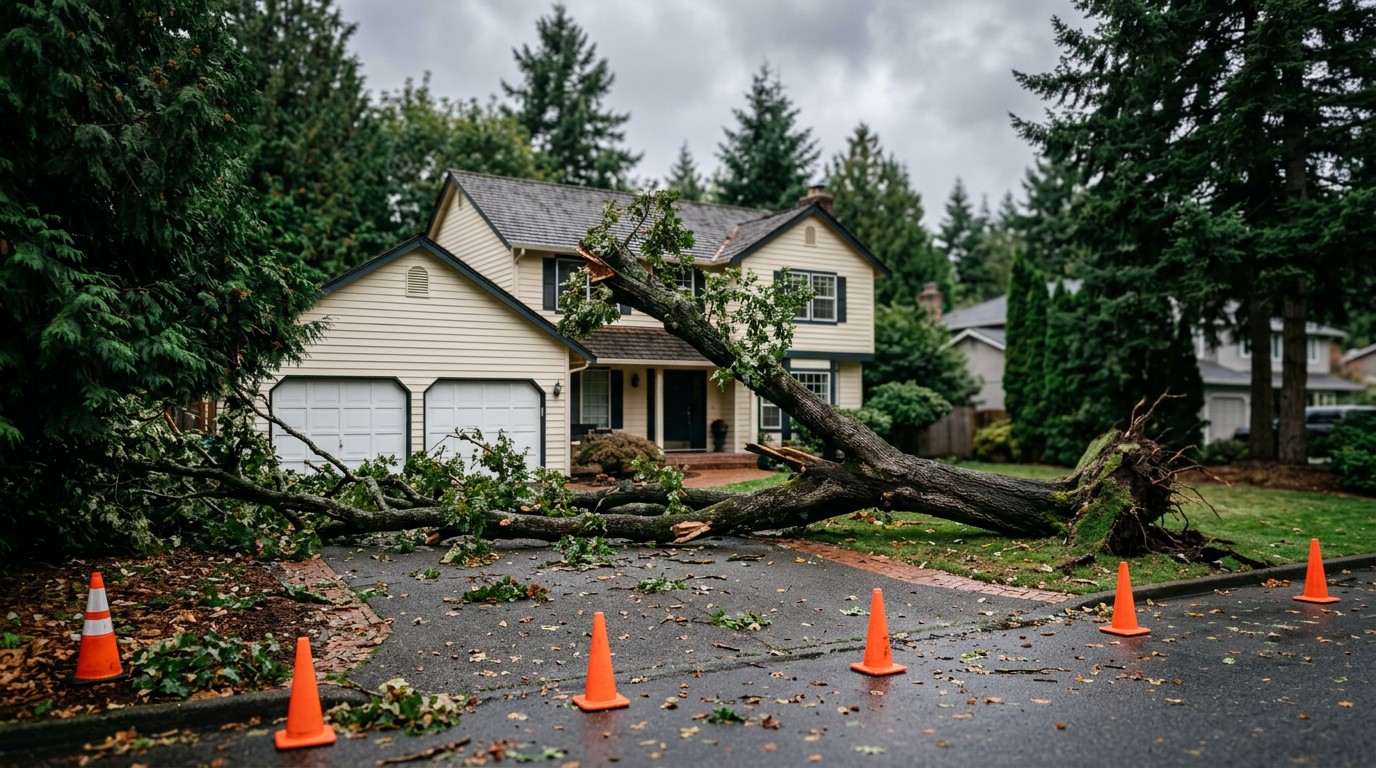
Do not approach a damaged tree or utility-line conflict. For an immediate threat, contact emergency services, notify the utility when lines are involved, and call an appropriately qualified tree company.
Verify arborist credentials, licensing, and permits
Check ISA credentials in the official directory
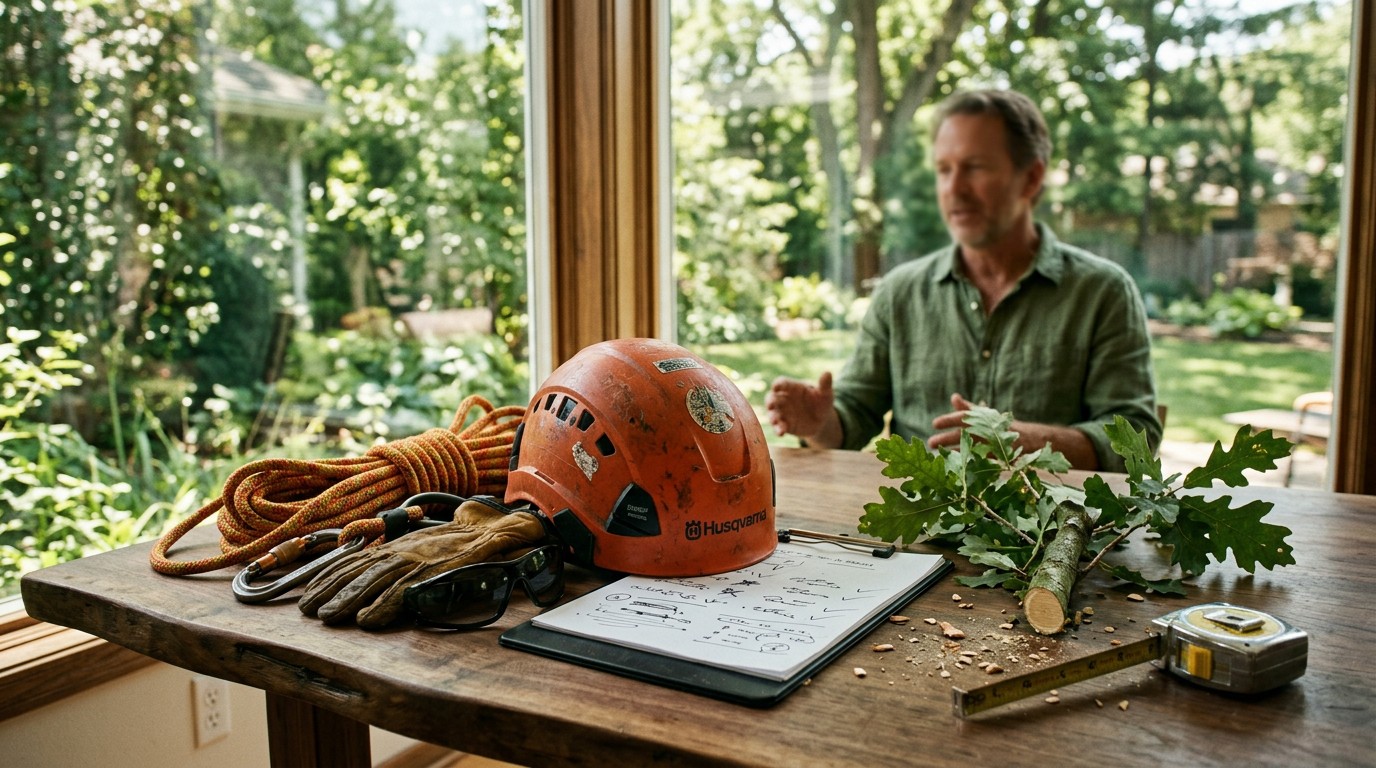
Verify each claimed credential by the individual’s name or credential number in the International Society of Arboriculture directory. Confirm that the record is current and that the person listed will assess, supervise, or perform the relevant work. A company logo alone does not establish that every crew member holds an ISA credential.
An ISA Certified Arborist is an individual who has satisfied ISA eligibility requirements, passed an examination, and maintains the credential. The ISA Tree Risk Assessment Qualification, commonly called TRAQ, is a separate individual qualification focused on a standardized tree risk assessment process. TRAQ is relevant when evaluating a potentially hazardous tree, but it is not a company-wide certification or a guarantee of a particular outcome.
Understand TCIA membership and Accreditation
Check company claims through the Tree Care Industry Association. TCIA membership and TCIA Accreditation are not interchangeable.
Membership indicates an organizational relationship with TCIA. Company-level TCIA Accreditation involves a formal review of specified business practices, safety programs, employee training, and related documentation. Neither status replaces verification of the individual assigned to the job, the written scope, current insurance evidence, or locally required licensing.
Ask for the company’s exact legal name before searching. Similar trade names can belong to different entities.
Confirm licenses and municipal permits locally
Licensing rules depend on the state, county, city, job value, and scope. Search the applicable official contractor registry using the legal business name and license number. The USA.gov state government directory can help locate the correct state agency, but city or county requirements may be separate.
Contact the municipal forestry, public works, planning, or permitting office before signing. Ask whether pruning or removing the specific tree requires approval, especially for street trees, protected trees, or regulated properties. The written quote should identify who applies for the permit, who pays the fee, and what happens if approval is denied or delayed.
Licensing, permit, and insurance requirements vary by jurisdiction. Verify current requirements and provider records through the applicable official state or local agency before hiring or authorizing work.
Confirm insurance, staffing, and safety practices
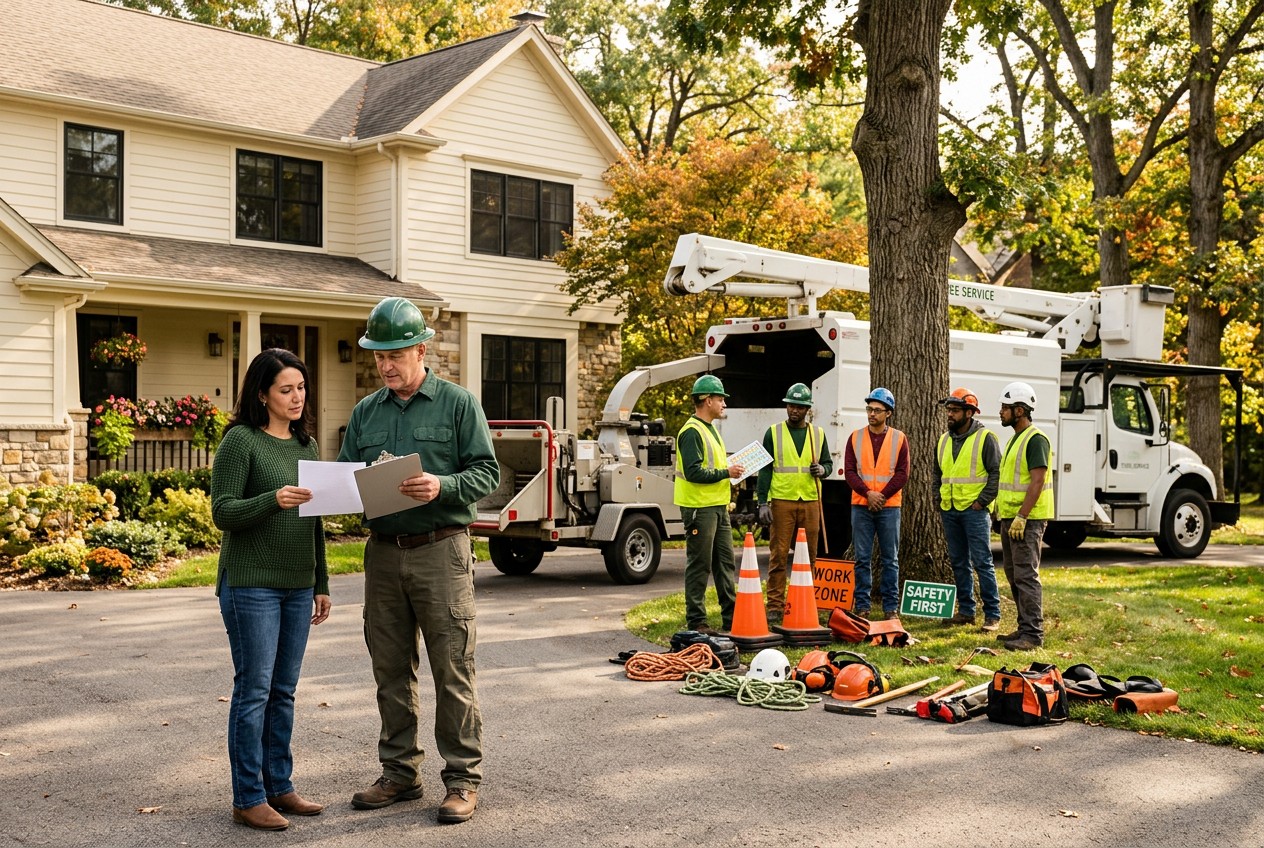
Verify insurance for the exact legal entity performing the work, identify every employer or subcontractor involved, and document who supervises the site.
Request and confirm a current certificate of insurance
Ask for a certificate of insurance issued for the company’s exact legal name, not merely a similar trade name. Check the insurer, policy numbers, effective and expiration dates, commercial general liability insurance, and workers compensation insurance. The standard ACORD certificate states that it provides information and does not change the underlying coverage.
Contact the listed insurer or agent through independently obtained contact details. Ask whether the policies are current and whether they apply to the named business and proposed operation. Do not treat a website badge, emailed policy number, or certificate alone as confirmation that coverage applies.
Insurance and workers compensation requirements vary by jurisdiction and business arrangement. Verify current requirements with the applicable state authority and confirm coverage directly with the insurer or authorized agent before work begins.
Ask who will perform the work
Require the quote to state whether employees, subcontractors, or both will perform the job and to identify the on-site supervisor. For each subcontractor, request the legal name, applicable insurance evidence, and written responsibility for property protection, damage reporting, and cleanup. State workers compensation contacts are available through the US Department of Labor.
Ask about recognized work and safety standards
Ask whether the written scope follows applicable provisions of ANSI A300 and ANSI Z133. ANSI A300 addresses tree-care practice performance, while ANSI Z133 addresses safety requirements for arboricultural operations. Neither standard is a license, credential, insurance policy, or proof of compliance. Ask how the company incorporates them into supervision, site control, and work planning.
Compare 3 itemized on-site quotes
Compare like-for-like written deliverables, not just totals. Each provider should inspect the site and identify assumptions that could change the amount due. If a line item is unclear, request a revised estimate before choosing a company.
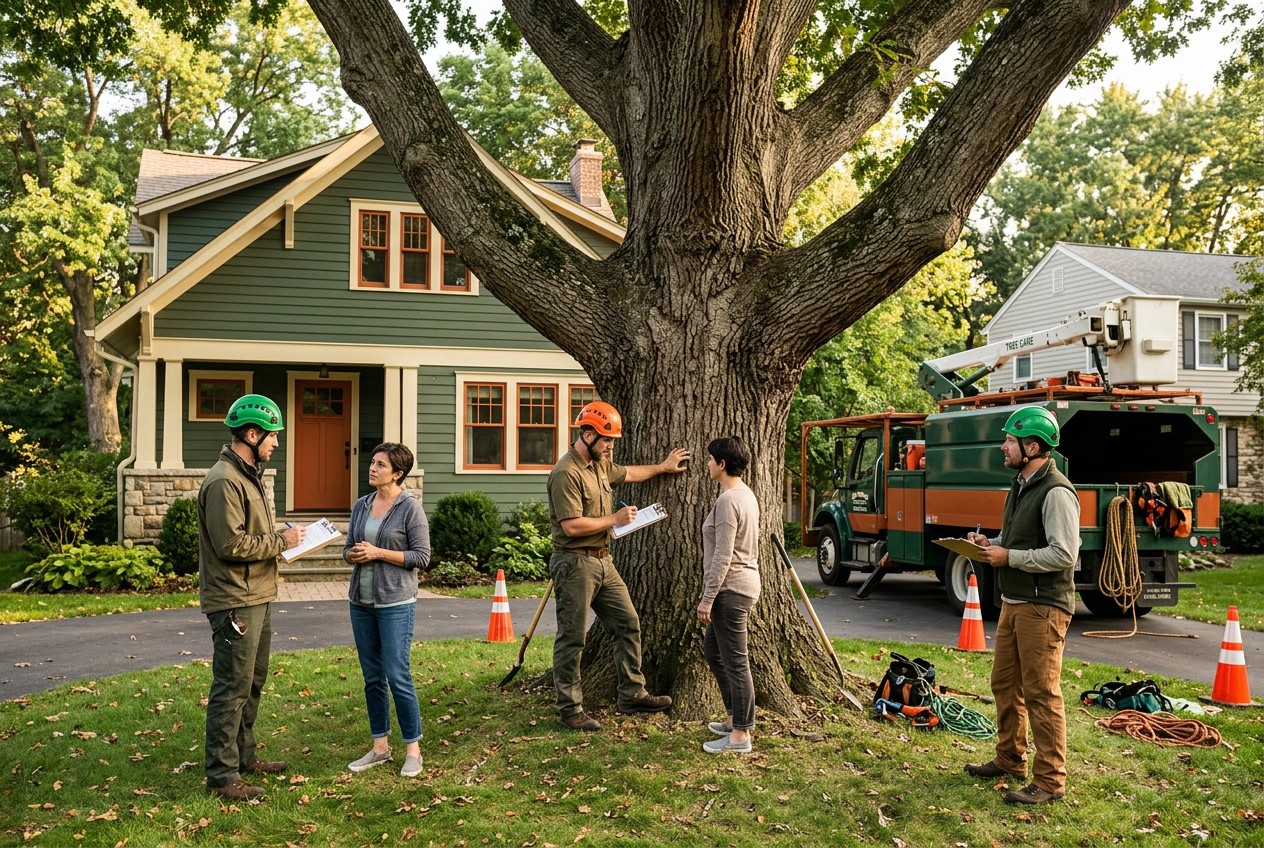
Use a three-quote comparison table
Copy each estimate into one worksheet. Record verified information, not website claims or verbal promises.
| Quote | Scope | Credentials | Insurance evidence | Exclusions | Cleanup | Payment terms |
|---|---|---|---|---|---|---|
| Quote A | Trees, objectives, access, property protection, schedule, restoration | Named credential holder and verification result | Current COI for performing entity | Omitted work, permits, utilities, subcontractors | Hauling, final cleanup, stump debris | Total, deposit, milestones, final payment |
| Quote B | Trees, objectives, access, property protection, schedule, restoration | Named credential holder and verification result | Current COI for performing entity | Omitted work, permits, utilities, subcontractors | Hauling, final cleanup, stump debris | Total, deposit, milestones, final payment |
| Quote C | Trees, objectives, access, property protection, schedule, restoration | Named credential holder and verification result | Current COI for performing entity | Omitted work, permits, utilities, subcontractors | Hauling, final cleanup, stump debris | Total, deposit, milestones, final payment |
Before comparing totals, circle blanks and conflicting assumptions. A quote that includes stump grinding, hauling, and lawn restoration is not equivalent to one that lists removal only.
Require a detailed scope of work
For pruning, require each tree to be identified and the objective stated, such as clearance or dead-branch removal. The estimate should identify affected branches instead of using vague wording such as “trim as needed.”
For removal, specify which trees are included and whether stump work is separate. Stump grinding should state the included scope, debris handling, and surface restoration. Also document site access, equipment placement, protection for roofs, fences, driveways, irrigation, and landscaping.
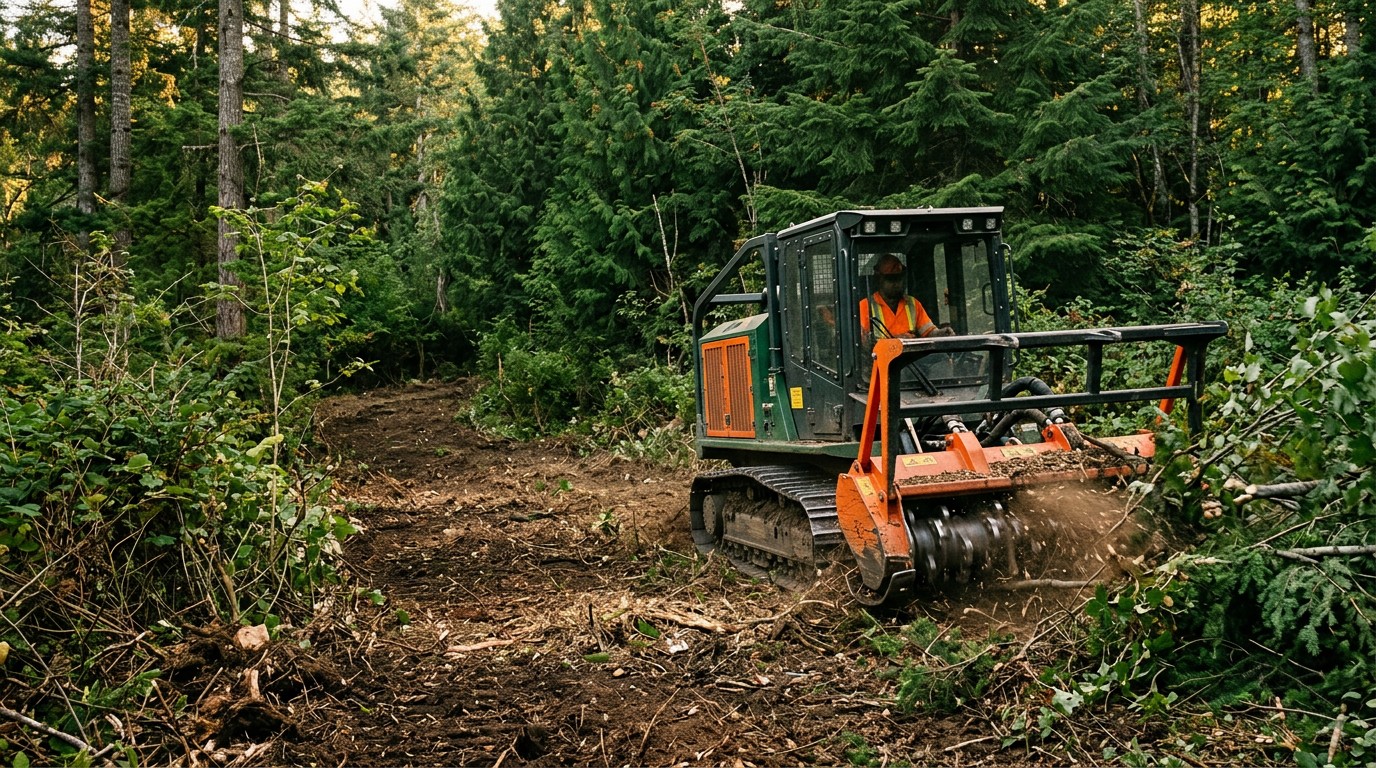
If land-clearing work is included, separate it from individual tree work so quantities and exclusions remain visible.
Clarify costs and responsibility before comparing totals
Assign responsibility for permits, utility coordination, access constraints, employees and subcontractors, disposal, cleanup, and damage reporting. State who pays permit or disposal charges, and require written approval through a change order before additional work begins.
Use the guides to tree removal cost, tree trimming cost, stump grinding cost, emergency tree removal, and land clearing cost to understand common cost drivers.
National guide figures vary by job and market. Confirm the final scope and price through an itemized on-site quote.
Review the contract, references, and red flags
Turn the selected estimate into a signed contract that records the agreed work, responsibilities, schedule, and payment terms. Do not rely on verbal promises or assume missing details are included.
Put payment and change terms in writing
The contract should state the total price, deposit, payment milestones, and conditions for final payment. Tie milestones to documented progress rather than dates alone. Identify an expected start window, scheduling contingencies, and any cancellation terms.
Require a written change order before additional work or charges begin. It should describe the change, price adjustment, and schedule effect, with approval from both parties. Also document how damage must be reported, who handles repairs, and whether lawn, driveway, fence, irrigation, or landscape restoration is included.
Check that the customer name, contractor’s legal business name, service address, and signatures are present. Keep the signed contract, estimate, insurance correspondence, permit records, and change orders together.
Contract, cancellation, deposit, licensing, and consumer-protection requirements vary by jurisdiction. Verify current rules with the applicable state or local licensing agency, attorney general, or consumer-protection office before signing.
Ask recent customer references specific questions
Request references from recent projects similar in scope and access conditions. Ask each customer:
- Did the company communicate clearly before and during the job?
- Were schedule changes explained promptly?
- Was the property protected and any damage documented?
- Did the crew complete hauling and cleanup as promised?
- Did the final work match the written scope?
- Were unexpected tasks and charges approved in writing?
- Did the final amount follow the contract and change orders?
A polished testimonial is less useful than a direct account of scope control, communication, and cleanup.
Recognize tree service red flags
Pause the hiring decision if the scope is vague, major tasks are omitted, or the company pressures you for immediate or full payment. Other warning signs include unverifiable credentials, expired or mismatched insurance documents, unclear subcontractor use, missing cleanup terms, and refusal to provide recent references.
Do not sign until blanks, exclusions, conflicting promises, and payment conditions have been resolved in writing.
Handle emergencies, utility conflicts, and assistance questions safely
A damaged, leaning, or storm-struck tree can become an immediate hazard without warning. Keep people and pets away, and do not attempt cutting, climbing, or removal yourself.
Know who to call for an immediate tree hazard
Call 911 when a tree presents an immediate threat to people, occupied buildings, or public travel. If branches or a tree are touching, pulling down, or lying near electrical lines, contact the utility company through its emergency number and follow its instructions. Never approach a downed line or assume it is inactive.
After the area is controlled, contact an appropriately qualified emergency tree service for assessment and response. Ask who will evaluate the tree, supervise the site, and coordinate with the utility or public authorities. For a formal tree risk assessment, ask whether a person holding the ISA Tree Risk Assessment Qualification will conduct it, then verify that individual’s current record in the official ISA directory.
Check official local assistance programs
Do not assume seniors qualify for free tree removal. Assistance for older adults, low-income households, disaster survivors, or hazardous trees varies by location, funding, property status, and program eligibility.
Start with the municipal or county forestry, housing, public works, or emergency-management office. The federal Eldercare Locator can connect older adults with local aging agencies. After a federally declared disaster, check DisasterAssistance.gov for current programs and covered expenses.
Request written eligibility rules before authorizing work. Confirm whether aid covers assessment, removal, debris hauling, or only damage related to a declared emergency.
Final pre-hire checklist and FAQ
Final sign-before-you-hire checklist
Before signing, confirm:
- The provider’s exact legal name and contact details
- Named credentials verified in the appropriate official directory
- Current insurance evidence confirmed with the listed insurer or agent
- Detailed scope, exclusions, access, property protection, and cleanup
- Responsibility for permits, utility coordination, and subcontractors
- Deposit, payment milestones, and final-payment conditions
- Written change-order, damage-reporting, and restoration terms
- Dates, service address, and signatures
How many quotes and what proof should you request?
Compare 3 itemized on-site quotes. Independently verify ISA credentials, any applicable contractor license in the current official registry, and insurance evidence for the legal entity performing the work. National guide figures vary by job and market, so confirm the price through an itemized on-site quote.
Who handles permits, deposits, and emergency hazards?
Confirm permit responsibility and locally applicable deposit rules before signing, then record both in the contract. Use the USA.gov state government directory to locate relevant agencies.
For an immediate hazard, keep away and contact 911. Notify the utility company about electrical-line conflicts, then use an appropriately qualified tree company.
Permit, licensing, deposit, and insurance requirements vary by jurisdiction. Verify current rules and records through applicable official agencies and insurers.
Work-site safety: Stay outside all designated work, drop, rigging, and equipment zones. Keep children, visitors, and pets away, and follow the on-site supervisor’s safety instructions until the area has been declared safe.
Underground hazards: Before stump grinding or other ground-disturbing work begins, confirm that all legally required utility locating has been completed and that private lines, irrigation systems, and other buried features have been identified.