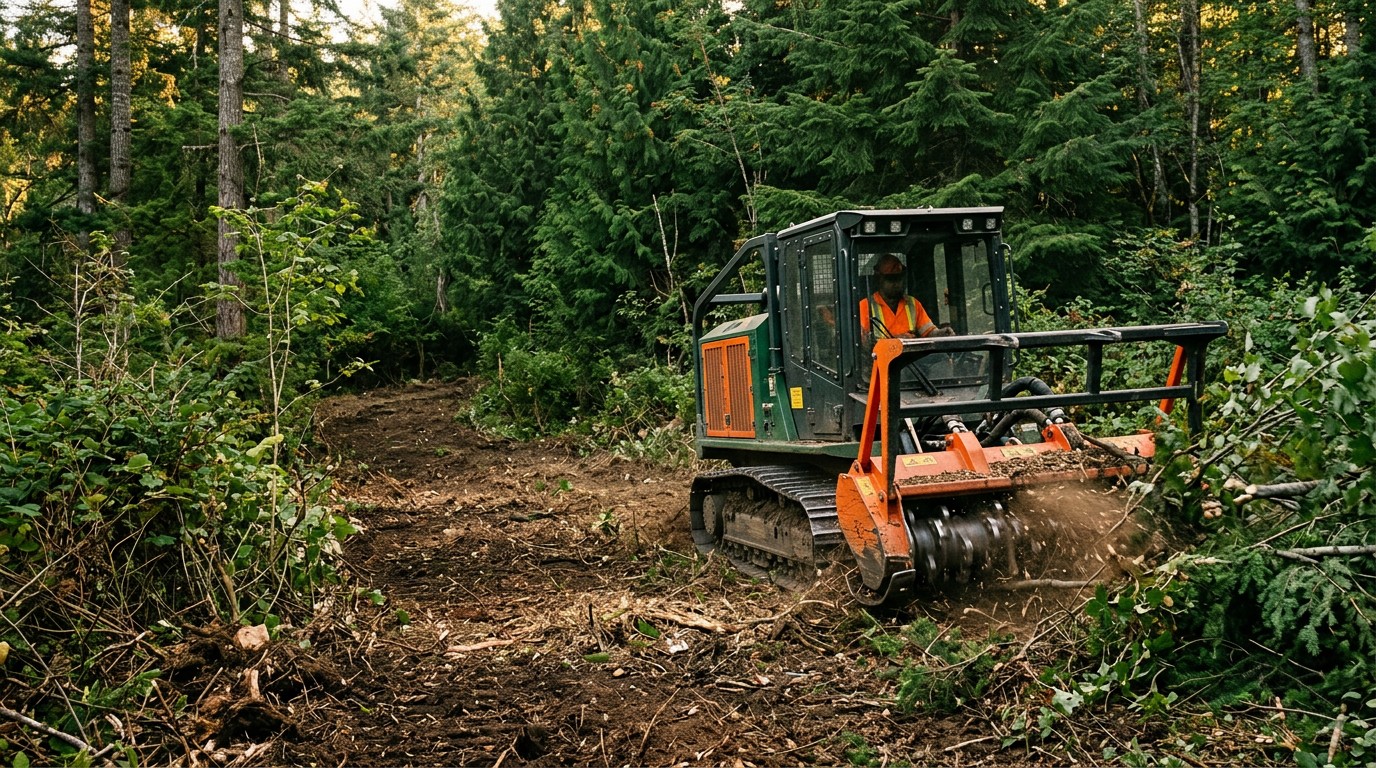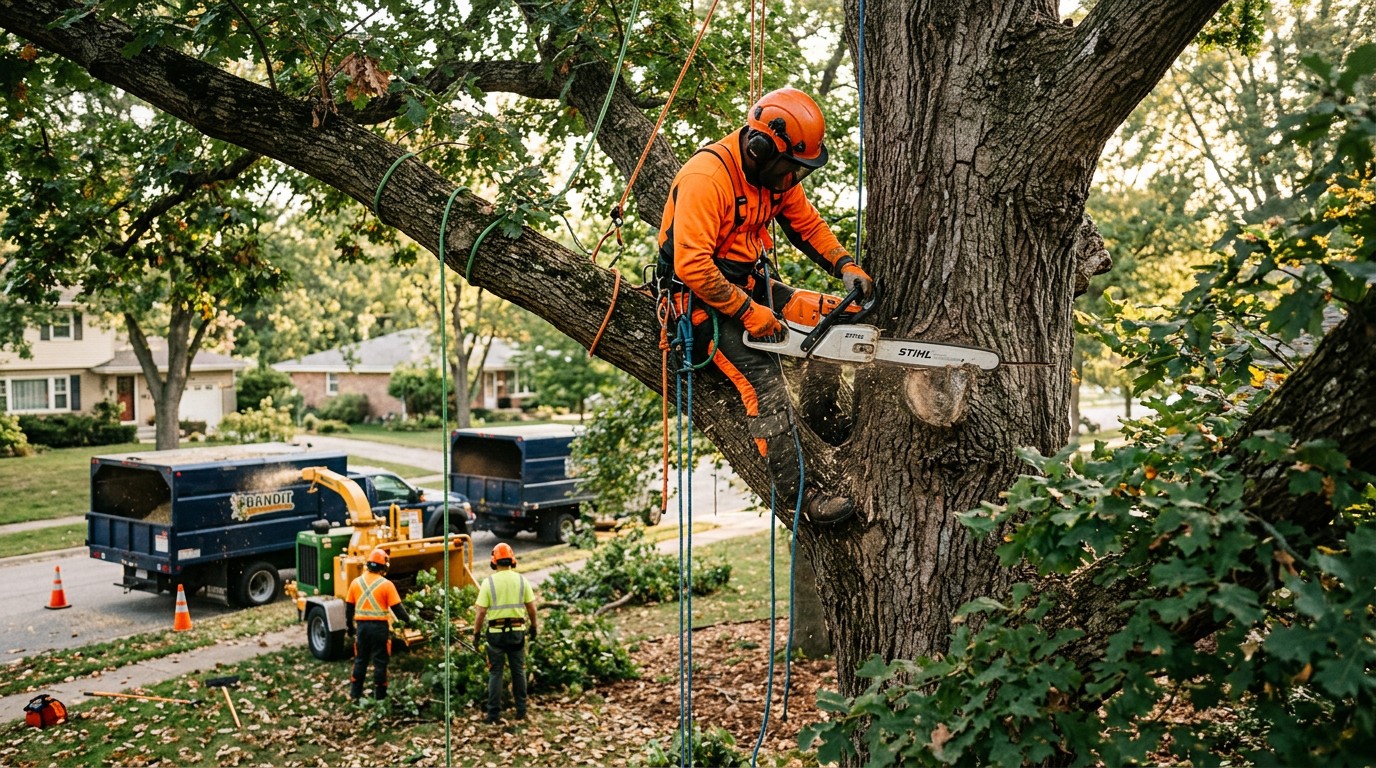
Tree removal cost is not one number. It swings with the tree’s height, its species, how close it stands to your house or the power lines, and what you want done with the wood afterward. The national cost guides put a typical removal somewhere between a few hundred and a couple thousand dollars, but the published extremes run from about $75 for a small tree already on the ground to $10,000 for a towering hardwood over a roof.
This guide collects what the major published sources - Angi, HomeAdvisor, HomeGuide, Fixr, LawnStarter, and Thumbtack - actually list, broken down by size, by species, by condition, and by the add-ons that quietly move the total. Every figure is quoted from a named guide, so you can walk into a bid conversation with real reference points instead of a guess.
Pricing note - reviewed August 7, 2026: Every figure on this page is quoted from a named published cost guide, each opened on August 7, 2026. These are national published ranges, not local quotes or Arbor Compass averages - tree work is priced job by job, and prices vary by market. Confirm the itemized total on site with a licensed, insured company.
How Much Does Tree Removal Cost?
There is no single national price for tree removal, only published reference points that disagree with each other by design, because “a tree” covers a 20-foot ornamental and an 80-foot oak equally. Angi and HomeAdvisor both put the typical range at $200 to $2,000 per tree, with an average around $750. HomeGuide lists $400 to $1,200 per tree. Fixr reports a national average of $435 with a typical range of $400 to $1,100. LawnStarter lists a $630 national average and a $385 to $1,070 typical band, or $10 to $14 per foot. Thumbtack puts the national average at $985 for removal, or $1,072 for a tree and stump together. HomeGuide also frames labor as $100 to $400+ per hour.
The extremes matter as much as the midpoints. Angi notes that shorter trees cost closer to $150, while taller, harder ones can reach up to $10,000. Fixr’s published extremes run $155 at the low end to $2,015 at the high end, and LawnStarter’s run $150 to $1,935. The sections below explain what moves a job from one end of that spread to the other, starting with the biggest lever: height.
Tree Removal Cost by Size
Height is the single largest driver of a removal price, because a taller tree means more climbing, more rigging, heavier limbs to lower safely, and more wood to cut up and haul. Angi and HomeAdvisor publish an identical four-band table. HomeGuide uses the same four height bands at somewhat higher numbers. Fixr splits its bands differently, grouping large at 60 to 100 feet and very large at 100 feet and up, so its rows do not line up one-to-one with the other three.
Angi lists $150 to $450 for a tree up to 30 feet, $450 to $1,200 for 30 to 60 feet, $800 to $1,500 for 60 to 80 feet, and $1,000 to $2,000 for anything over 80 feet, and HomeAdvisor publishes the identical bands. HomeGuide runs higher across the board, at $200 to $500 for small, $500 to $1,500 for medium, $850 to $2,000 for large, and $1,200 to $2,500+ for extra-large.
Published guide figures by tree height
| Height band | Angi | HomeAdvisor | HomeGuide | Fixr |
|---|---|---|---|---|
| Small (up to 30 ft) | $150-$450 | $150-$450 | $200-$500 | $150-$400 |
| Medium (30-60 ft) | $450-$1,200 | $450-$1,200 | $500-$1,500 | $450-$700 |
| Large (60-80 ft) | $800-$1,500 | $800-$1,500 | $850-$2,000 | $900-$1,200 |
| Extra-large (over 80 ft) | $1,000-$2,000 | $1,000-$2,000 | $1,200-$2,500+ | $1,300-$2,000 |
Fixr’s large and very-large figures ($900 to $1,200 and $1,300 to $2,000) sit against 60-to-100-foot and 100-foot-plus bands, not the 60-to-80 and over-80 bands used by the other three, so read that last column as a rough parallel rather than a direct match.
Tree Removal Cost by Species
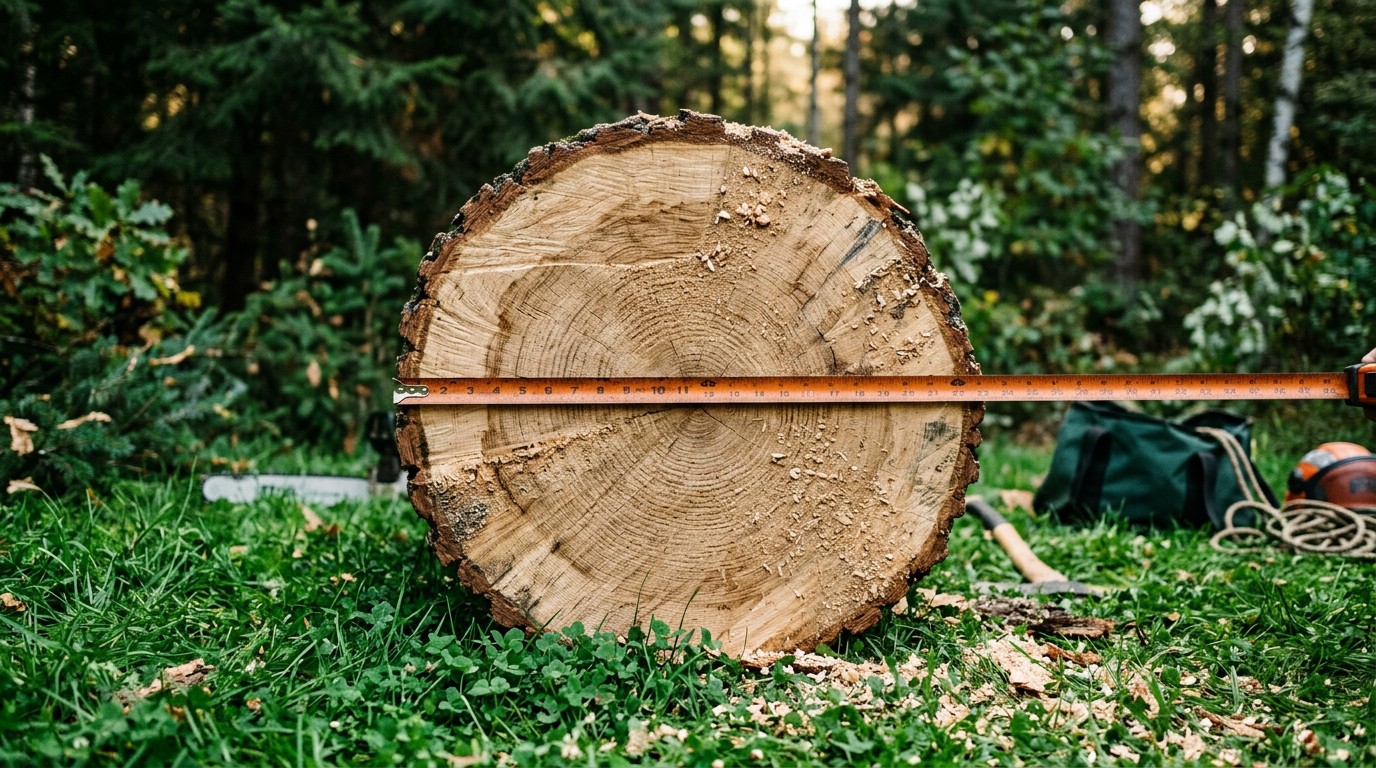
Species is a proxy for a bundle of things a crew prices: how dense and heavy the wood is, how tall and wide the canopy grows, how brittle the limbs are, and how much debris the job leaves behind. A spreading hardwood is a different job from a single-trunk palm, and the guides price them differently.
Angi lists oak at $200 to $2,000, pine at $250 to $1,500, palm at $650 to $1,500, and maple at $250 to $2,000. HomeGuide lists oak at $300 to $2,500, pine at $250 to $1,600, palm at $200 to $1,200, and maple at $600 to $1,200. Fixr lists pine at $200 to $1,500, palm at $250 to $1,200, oak at $900 to $2,000, and maple at $1,000 to $1,800.
Published guide figures by species
| Species | Angi | HomeGuide | Fixr |
|---|---|---|---|
| Oak | $200-$2,000 | $300-$2,500 | $900-$2,000 |
| Pine | $250-$1,500 | $250-$1,600 | $200-$1,500 |
| Palm | $650-$1,500 | $200-$1,200 | $250-$1,200 |
| Maple | $250-$2,000 | $600-$1,200 | $1,000-$1,800 |
Some species sit far outside these bands. Angi lists Japanese knotweed removal at $2,000 to $10,000, and aspen at $1,000 to $1,800, while Fixr lists sycamore at $700 to $2,500 and poplar at $1,100 to $1,800. If your tree is not oak, pine, palm, or maple, treat these four as the shape of the market and ask your bidder to price your specific species.
Fallen, Dead, and Diseased Trees
A tree that is already down is usually the cheapest tree to deal with, because the dangerous part - getting it to the ground in a controlled way - is done. Angi lists $75 to $150 to remove a fallen tree, and HomeAdvisor lists the same $75 to $150 plus any hauling fees. LawnStarter is higher, at $85 to $300 for a crew to clear a fallen tree from a yard.
Dead and diseased standing trees cut both ways on price. Fixr lists $75 to $400 to remove a dead tree, $400 to $900 for a diseased one, and $300 to $500 for an uprooted tree, and Angi echoes the $400 to $900 diseased and $300 to $500 uprooted-or-fallen figures. Softer, decayed wood can be quicker to cut, which Angi notes can make a diseased tree less expensive to remove - but instability near a structure can add precautions that push the price the other way. This is one to have a professional look at in person.
Add-Ons That Change the Total
The headline range is the tree itself. These line items are where two bids for the same tree diverge, so ask which are included and which are extra before you compare numbers.
Crane service. When a tree is too tall or too boxed-in to climb and rig, a crew brings in a crane. Angi puts this at about $500, including the truck rental and additional staff, or around $250 to $600 per day, and notes the total on a complex job can climb to $6,000 to $7,000. HomeAdvisor lists the crane as a $500 line item at $250 to $600 per day, with the same $6,000 to $7,000 ceiling on a complex job. Fixr lists crane-assisted removal at $1,500 to $2,500.
Access and proximity. A tree in a tight backyard, over a fence, or beside power lines needs slower, more careful work. Angi says to expect 25% to 50% more to remove a tree in a tight, hard-to-reach, or unsafe spot, HomeAdvisor likewise says a tricky location near structures or power lines can add 25% to 50%, and LawnStarter puts an inaccessible tree at up to 50% more.
Debris, chipping, and hauling. What happens to the wood is a separate decision. Angi lists hauling at about $70, chipping at an average of $95, and splitting into firewood at about $70. HomeAdvisor lists chipping at $95, log splitting at $70 per tree, and debris hauling at $70. LawnStarter lists hauling at $50 to $90, chipping at $65 to $125, and splitting at $50 to $90. HomeGuide lists wood chipping at $50 to $100 and log splitting at $50 to $100, and Fixr lists debris removal at $150 to $300.
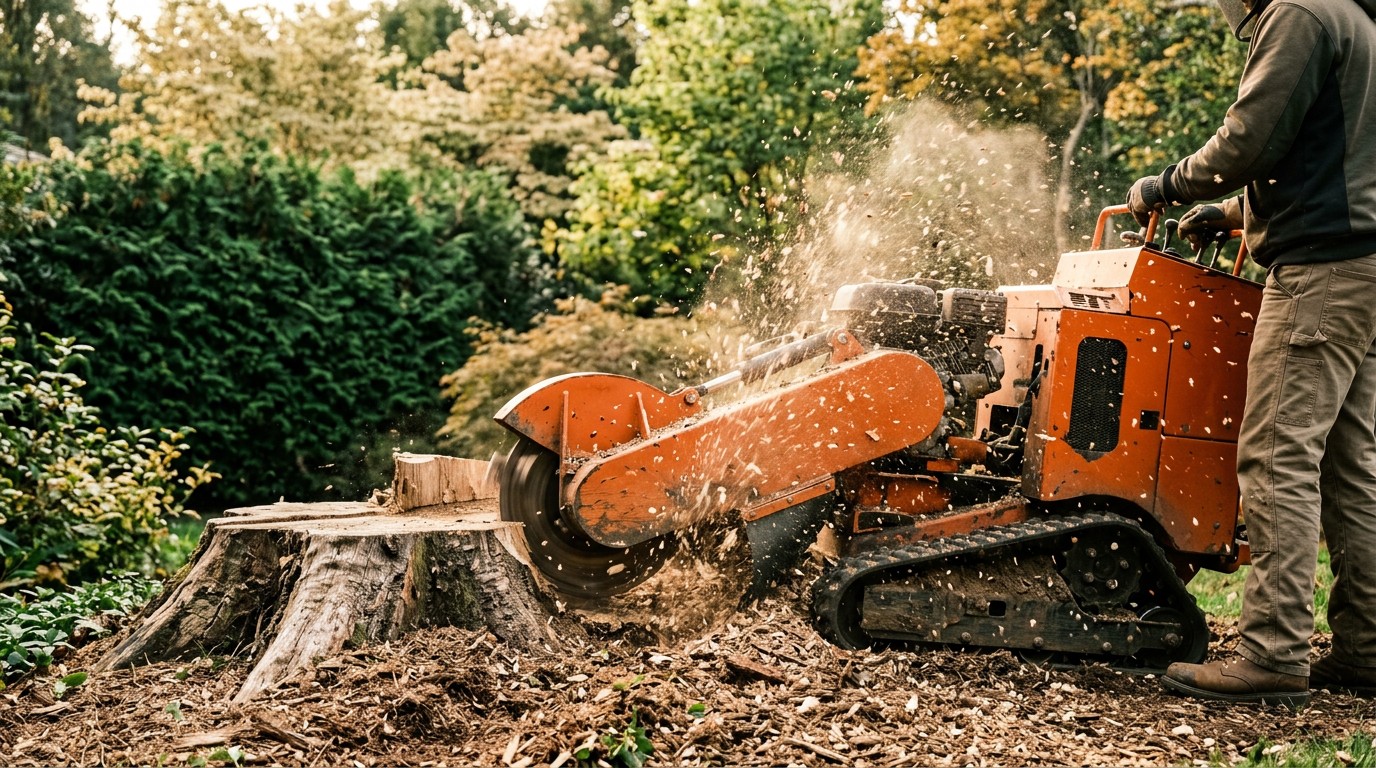
Stump. The price to remove a tree usually does not include the stump. HomeAdvisor lists stump grinding at $120 to $500 and pulling the stump out completely at $100 to $150, and Thumbtack’s $1,072 tree-and-stump figure sits above its $985 removal-only average. Our stump grinding cost guide breaks that line item down by diameter.
Emergency and storm work. After a storm, rates spike as crews get slammed. Angi notes it is not unheard of to pay as much as $5,000 in an urgent situation. Our emergency tree removal guide covers the storm surcharge and what to expect. For the crews that handle it, see emergency and storm damage.
Permits and travel. Angi lists $60 to $150 per permit, and HomeAdvisor lists the same $60 to $150. HomeGuide lists tree removal permits at $75 to $450, and notes they typically include stump grinding. For homes outside a company’s service area, Angi lists about $0.50 per mile, or a flat $50 to $200 for travel.
What Goes Into a Removal Quote
Underneath every headline range is a set of parts. Some crews price by the foot: Fixr lists $2 to $5 per foot on height or diameter, LawnStarter lists $10 to $14 per foot, and HomeGuide frames the labor at $100 to $400+ per hour. Those per-unit figures are why a single tall tree can cost more than two short ones.
Labor is the largest piece, and it is priced locally. According to the U.S. Bureau of Labor Statistics OEWS program (May 2025), tree trimmers and pruners earned a national mean of $26.91 per hour, but the metro spread is wide - the Houston-Pasadena-The Woodlands metro came in at a $20.08 mean hourly wage, while the Denver-Aurora-Centennial metro came in at $27.47. That labor gap is part of why the same tree draws a different bid in Houston than in Denver. National guide figures set the frame; a local, in-person quote sets your actual price.
Questions to Ask Before You Sign
The published ranges tell you whether a bid is in the right ballpark. These questions tell you whether the company on the other end of it is one you want on your property. Every item here is verifiable before you sign.
- Are you licensed to do tree work in this jurisdiction, and can I see it?
- Do you carry liability insurance and workers’ compensation, and can I get a current certificate of insurance?
- Is an ISA Certified Arborist on staff or on this job? The International Society of Arboriculture credential is verifiable by name.
- Is the quote itemized - removal, stump, debris, crane, permit - and is it fixed or an estimate?
- Who pulls the permit, and is that fee in the quote? If your city requires an arborist’s report for the permit, Angi lists that at an average of $860.
- What exactly gets hauled away, and what gets left - logs, chips, or a bare stump?
- Is the crew doing the work the same one giving me the quote?
A company that answers these in writing is giving you what no national guide can: a real, local, itemized price from a named, insured crew. You can compare a few of them side by side through our tree removal listings or the full directory.
Frequently Asked Questions
How much does it cost to remove a large oak tree?
It depends on height and access, but the species guides give a range. Angi lists oak removal at $200 to $2,000, HomeGuide at $300 to $2,500, and Fixr at $900 to $2,000. A tall oak over 80 feet lands in the extra-large size band, which Angi and HomeAdvisor list at $1,000 to $2,000 and HomeGuide lists at $1,200 to $2,500+. If a crane is needed, Fixr lists crane-assisted removal at $1,500 to $2,500 on top of that.
Is stump removal included in tree removal cost?
Usually not. The removal price is for taking the tree down and cutting it up. HomeAdvisor lists stump grinding separately at $120 to $500 and stump pull-out at $100 to $150, and Thumbtack’s tree-and-stump figure ($1,072) runs above its removal-only average ($985). See our stump grinding cost guide for the breakdown by diameter.
How much more does emergency tree removal cost?
More than a scheduled job. HomeGuide notes same-day or next-day removal often costs 2 to 3 times the standard rate, Fixr lists emergency service at $450 to $5,000, and Angi notes urgent situations can reach $5,000. Our emergency tree removal guide has the full picture.
What is the difference between tree removal and tree trimming cost?
Trimming keeps a tree; removal takes it out. Trimming is generally cheaper - HomeGuide lists tree trimming at $400 to $900 per tree and Angi at a $460 average - versus the $200 to $2,000 Angi and HomeAdvisor list for removal. Our tree trimming cost guide covers pruning and trimming prices in detail.
Why do tree removal quotes vary so much?
Because the inputs vary. Height, species, access, whether a crane is needed, what happens to the debris, permit fees, and local labor rates all move the number, which is why Angi’s own range spans $150 to $10,000. That is also why the guides publish national ranges rather than one price, and why an in-person quote is the only figure that reflects your specific tree.
Find tree removal near you
Compare top-rated companies offering tree removal in Houston, Denver, Atlanta, Dallas and Charlotte.
Browse tree removal companies →
Service scope and rates vary by company and city - confirm the details with a written estimate directly from the company.